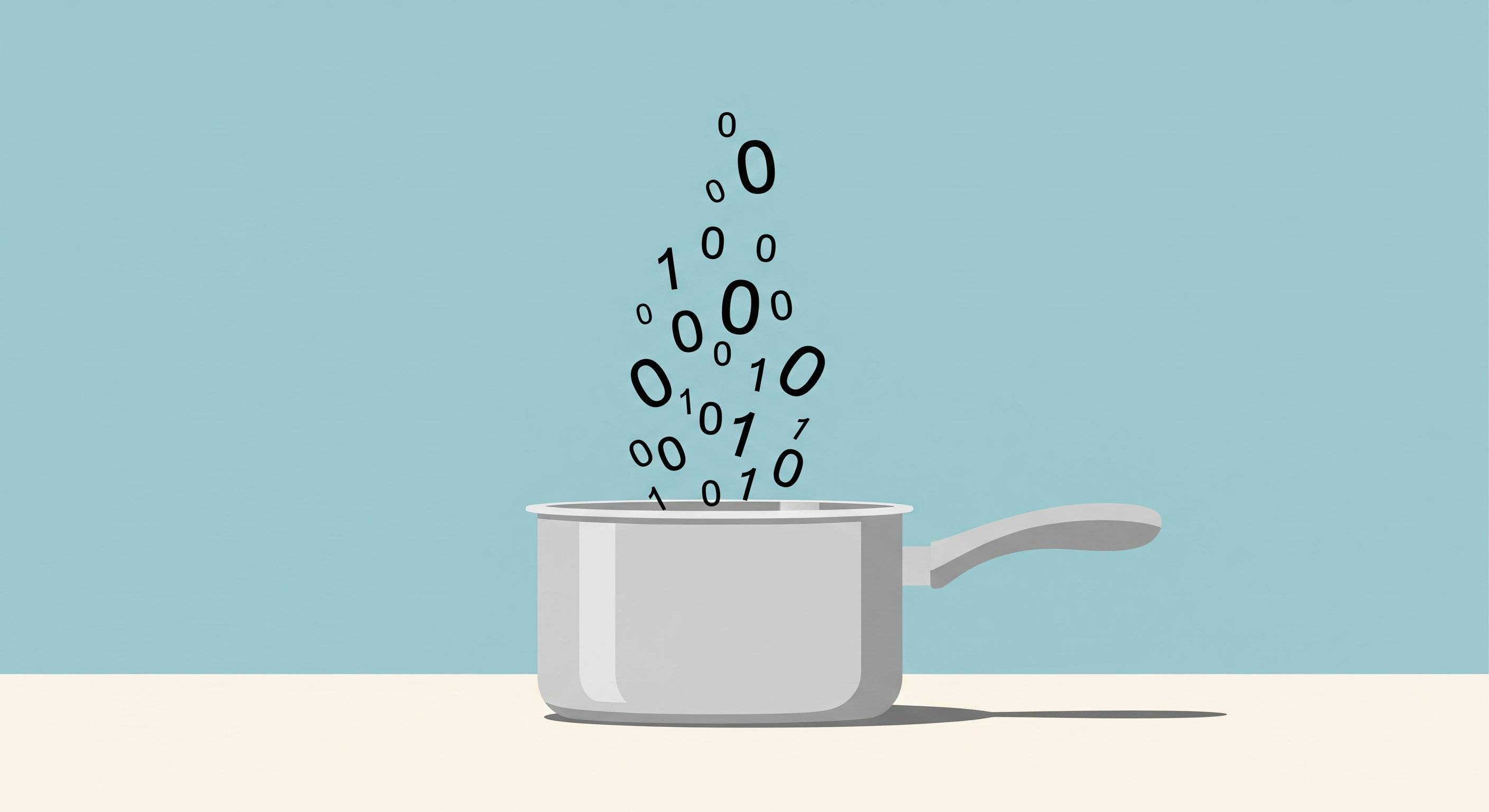
How to Make an AI Model? An Explanation for Curious Minds
Have you ever wondered how your phone knows the next word you want to type, or how a video game character learns to find its way through a maze? These amazing feats are powered by Artificial Intelligence (AI).
Making an AI might sound like something from a science fiction movie, but it's a bit like teaching a computer a new trick. This post will break down how it's done in a simple, step-by-step way.
The Super Simple Answer
Making an AI model is a straightforward process. First, you decide on a specific problem you want the AI to solve. Then, you gather lots of examples for it to learn from—this is called data. Next, you pick a recipe for how it should learn from those examples, which is called an algorithm. Finally, you let the computer practice over and over again on the data until it gets good at the task. This last part is called training.
The Deep Dive: The "How" and "Why"
Making an AI is a step-by-step process, much like baking a cake or building with LEGOs. You can’t just skip to the end; each step builds on the last one. We'll break down this journey into five main steps that take an AI from a simple idea to a working tool.
Step 1: Decide What You Want to Make (Defining the Goal)
Before we start baking, we have to decide what we want to make. A cake? A cookie? A pizza? In the AI world, this is the first and most important step: deciding what problem the AI will solve.
You need a clear goal. Is the AI supposed to spot spam emails? Predict how much a house will sell for? Or sort your family photos into groups for you? Having a clear question is the foundation for everything else you do.
Think of it like this: You can't just walk into a kitchen and start grabbing ingredients randomly. You first decide, "I'm going to bake a chocolate cake." That decision tells you which ingredients you'll need, which recipe to follow, and what the final product should look and taste like. Without that goal, you'd just have a big mess!
Step 2: Get Your Ingredients (Collecting Data)
The next step in making an AI is to collect a lot of information, which we call data. This data is what the AI will learn from, and it can be anything: pictures, words, numbers, or even sensor readings.
The experts are very clear that having high-quality and clean data is the most important part of the entire process. This means the information needs to be correct, relevant, and not messy with errors or missing pieces.
Think of it like this: If you want to teach a computer to know what a cat looks like, you need to show it thousands of pictures of cats. These pictures are your "ingredients." If you use bad ingredients, like pictures of dogs or blurry photos, you'll end up with a very confused AI, just like you’d get a bad cake if you used salt instead of sugar!
Step 3: Pick a Recipe and Start Cooking (Choosing an Algorithm and Training)
Once you have your ingredients (the data), you need to choose a "recipe." In the AI world, this recipe is called an algorithm. An algorithm is just a set of rules that tells the computer how to learn from the data.
Just like in cooking, there are different types of recipes for different jobs—some are simple like a decision tree, while others are complex like a neural network. After you pick your algorithm, the training begins. This is where the computer follows the recipe and practices on the data over and over, slowly getting better at its task.
There are three main "learning styles," which are like different kinds of recipes:
- Supervised Learning: This is like teaching with flashcards. The computer is given examples that already have the right answers (for example, a picture of a cat with the label "cat"). It learns by comparing its guess to the correct answer and fixing its mistakes.
- Unsupervised Learning: Here, the computer gets a bunch of data without any right answers and has to find patterns on its own. It's like giving someone a giant pile of LEGOs and asking them to sort it by color without ever telling them the names of the colors.
- Reinforcement Learning: The computer learns by trial and error. It gets "rewards" for good moves and "penalties" for bad ones. It's very similar to training a puppy with treats for sitting and a firm "no" for chewing on the furniture.
Think of it like this: Training the AI is the "cooking" part. The computer looks at a picture of a cat (the ingredient) and makes a guess. At first, its guesses are all wrong. But the algorithm (the recipe) helps it fix its mistakes. It keeps guessing and fixing, over and over, for thousands of pictures. This process of practice is how the AI learns to get it right, just like you learn to ride a bike by trying and falling until you get your balance.
Step 4: The Taste Test (Evaluating the Model)
After the AI has been trained, you have to test it to see how well it learned. This step is called evaluation.
To do this, you give the AI a completely new set of data that it has never seen before and check if it can make correct predictions. This is a critical step to make sure the AI didn't just "memorize" the answers from the training data (a problem called overfitting). But you also have to watch out for the opposite problem, underfitting, where the AI didn't learn enough to do its job well.
Think of it like this: This is the "taste test" for our AI cake! You wouldn't serve a cake without tasting a slice first, right? To test the AI, you show it new pictures of cats it's never seen. If it correctly says "That's a cat!" for most of them, you know it's just right. Overfitting is like memorizing the recipe for one specific cake but being unable to bake any other. Underfitting is like not even learning the recipe at all—it hasn't learned enough to do the job!
Step 5: Serving It Up! (Deployment and Maintenance)
The final step is deployment, which is a fancy word for making the AI model available for people to use, like putting it inside an app or on a website.
But the work isn't over. An AI model is never really "done." It needs to be constantly watched, or monitored, to make sure it's still working well. Over time, it will also need to be updated with new data to keep it sharp and accurate, a process called retraining.
Think of it like this: Deployment is like opening your bakery and selling your amazing cat-spotting cake! You put it in an app so everyone can use it. But over time, people might send you pictures of new cat breeds you didn't have before. So, you have to occasionally bake a new, improved cake with these new ingredients. That's why AI models are always being updated to get even smarter.
Conclusion: You're an AI Chef!
And that's it! In the end, making an AI isn't some dark art. It's a careful process that starts with a clear goal, then giving a computer good ingredients (data), a clear recipe (an algorithm), lots of practice (training), and a taste test to make sure it all turned out right.
So, the next time you see AI in action, you can think of all the "AI chefs" who worked hard to bake it. It’s not magic, it’s just a really cool way of teaching computers!
Experience the power of local AI directly in your browser. Try our free tools today without uploading your data.